Rethinking food systems offers a major opportunity to address global challenges. A new model shows how citizens can play a central role in innovation.
Listen to this article
Article by Diego Giuliani
Global food systems sit at the centre of some of today’s most significant opportunities for environmental, health and social progress. They account for over one third of total greenhouse gas emissions. According to a report by the British think tank Chatham House, they were also recognised in 2021 as an important factor in biodiversity loss on our planet. Two years later, the UN Food and Agriculture Organization (FAO) placed the scale of potential gains from improving food systems at around $12.7 trillion per year, roughly 10% of global GDP, when accounting for impacts across health, the environment and society. At the same time, FAO figures show that access to nutritious food remains uneven: 730 million people remain undernourished globally, while healthy diets remain out of reach for one-third of the world’s population. Together, these trends point to a timely opportunity to reform food systems, one that can reshape global dietary patterns and place the promotion of biodiversity at the centre of farming practices.
Studying everyday behaviour and how people can transition towards more sustainable living patterns related to food is one of the main activities of Arlind Xhelili. An expert in consumer behaviour and consumption patterns, since 2015 he has been working at the German CSCP, a think and do tank based in Wuppertal, Germany, focused on sustainable consumption and production. “Our behaviours are shaped by both what we know, how easily we can act on that information or knowledge, and by the choices available to us,” he explains. “When it comes to food consumption, one important factor is access to clear, usable information and practical knowledge: how to assess what is nutritious, seasonal and more sustainable, but also how to plan meals, cook with fresh ingredients, store food safely and make good use of leftovers. Availability and convenience matter too, because more sustainable options are not always easy to find where people usually shop and can be shaped by price, location and the way supply chains are organised. Habits, trust and social norms also play a role: people often rely on familiar routines and convenient foods, may be unsure about sustainability claims, or feel hesitant about using surplus, redistributed or ‘imperfect’ food options.”
To generate deeper knowledge about everyday food patterns and turn these insights into data that can support the transformation towards more sustainable food systems, the EU-funded project SPOON has been set up, coordinated by Arlind Xhelili and the CSCP, and aimed at co-creating a fairer, healthier and more sustainable food future. “The project works on three different levels,” he explains. “First, there are the citizen science labs, where we explore everyday food patterns with people, including related challenges, ideas and opportunities, and gather insights into food consumption behaviour. Second, there are behaviour change interventions, which use different forms of co-creation and consumer engagement to help us learn more about consumption patterns in real-life settings, where people make and implement food choices. Third, there is the digital toolset: a GDPR-compliant solution that supports the broader citizen science dimension of the project by enabling large-scale data and insight collection across different places.”
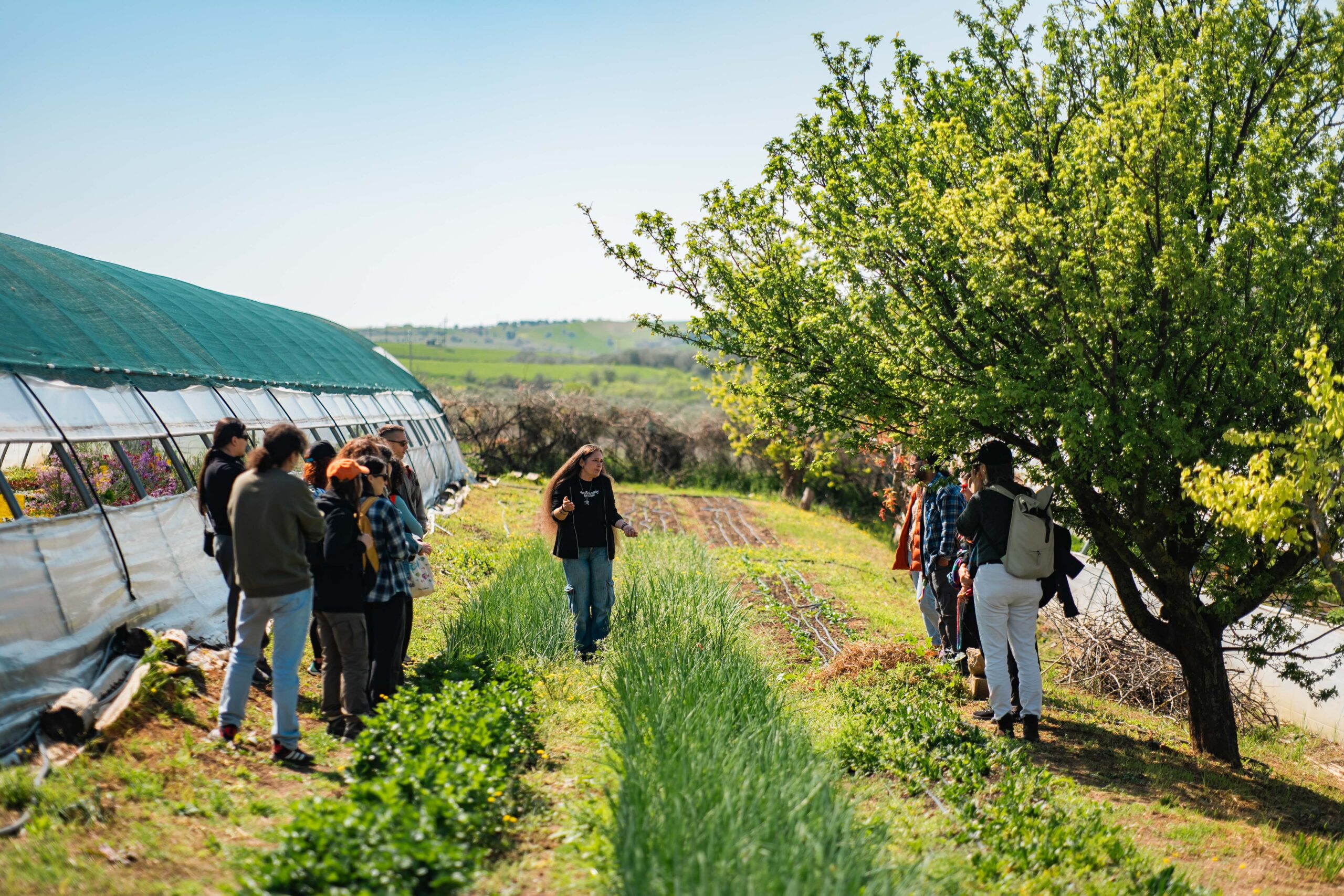
Citizens taking part in a guided vineyard visit.
The citizen science labs he refers to build on the established concept of living labs: open innovation ecosystems where users, researchers, companies and public authorities co-create, test and validate solutions in real-world conditions. Rather than replacing this model, SPOON’s citizen science labs add a stronger data-driven research dimension by focusing on the collection, interpretation and use of data on food consumption patterns, alongside analysis and knowledge co-creation. The aim is to make research more grounded in everyday realities and generate evidence that can support more relevant policy and practical solutions.
Citizen science is an established approach based on the principle that people are not only recipients of solutions, but can also contribute knowledge, experience and data that improve how those solutions are designed. In SPOON, this contribution is especially important because citizens help generate data from the contexts in which food choices actually take place. And this, Xhelili says, creates an important opportunity: “Solutions are often designed from a broader level, or developed in ways that do not fully reflect the realities of the people expected to use them. By involving targeted audiences from the start, we can better understand which issues are relevant locally and collect data that reflects everyday food practices more accurately. At the same time, this data can feed into larger-scale analysis, which is what makes the approach especially valuable.”
Six citizen science labs across Europe are testing this approach. United by the goal of supporting healthier and more sustainable diets, and by a shared interest in the everyday patterns that shape food choices, they bring together diverse actors with experience in engaging citizens and consumers. Their work focuses on topics such as access to fresh, local and nutritious food, affordability, practical knowledge around healthier and more sustainable diets, trust in sustainable food systems, food safety, food waste, local sourcing, and stronger connections between producers, consumers and other actors. While each lab approaches these themes from its own local context, together they offer an opportunity to generate richer data and insights into how food choices are made in practice, and how more relevant solutions can emerge from everyday realities.
One of them is in the Slovenian region of Pomurje: an area bordering Austria, Hungary and Croatia, whose ecosystem largely revolves around agriculture and food production, yet marked by strong demographic ageing and among the least economically developed in the country. “In our region, the average salary is lower than in the rest of Slovenia, and this affects people’s ability to afford fresh, local or organic produce,” explains Sasa Straus, food system expert at the Slovenian non-profit business support organisation ITC. Hence the local citizen science lab aims to “first raise awareness that healthy and sustainable food is beneficial for individuals, the economy and the environment; and second, create the conditions that make such food more accessible.”
Whether through the co-design of agricultural product traceability systems or information workshops for citizens and farmers, the involvement of end users proves essential for more effectively addressing specific local challenges. “We apply this bottom-up approach on a daily basis with all actors in the value chain. We engage with them to understand their real needs and to explore together how to address them effectively. This is also crucial for ensuring the acceptance of the solutions developed, as our experience shows that without such involvement, solutions are rarely adopted,” continues Straus. Crucial to building trust and public acceptance is also the fact that citizens are not seen merely as participants, but as active contributors to solution development, from its design phase to its practical implementation. “The added value of this approach is that it builds trust in the process. Citizens feel ownership, as they are directly involved, and they perceive the outcomes as reflecting their own views rather than as solutions detached from local realities,” stresses Straus’s colleague and programme manager at ITC, Tamara Kozic.
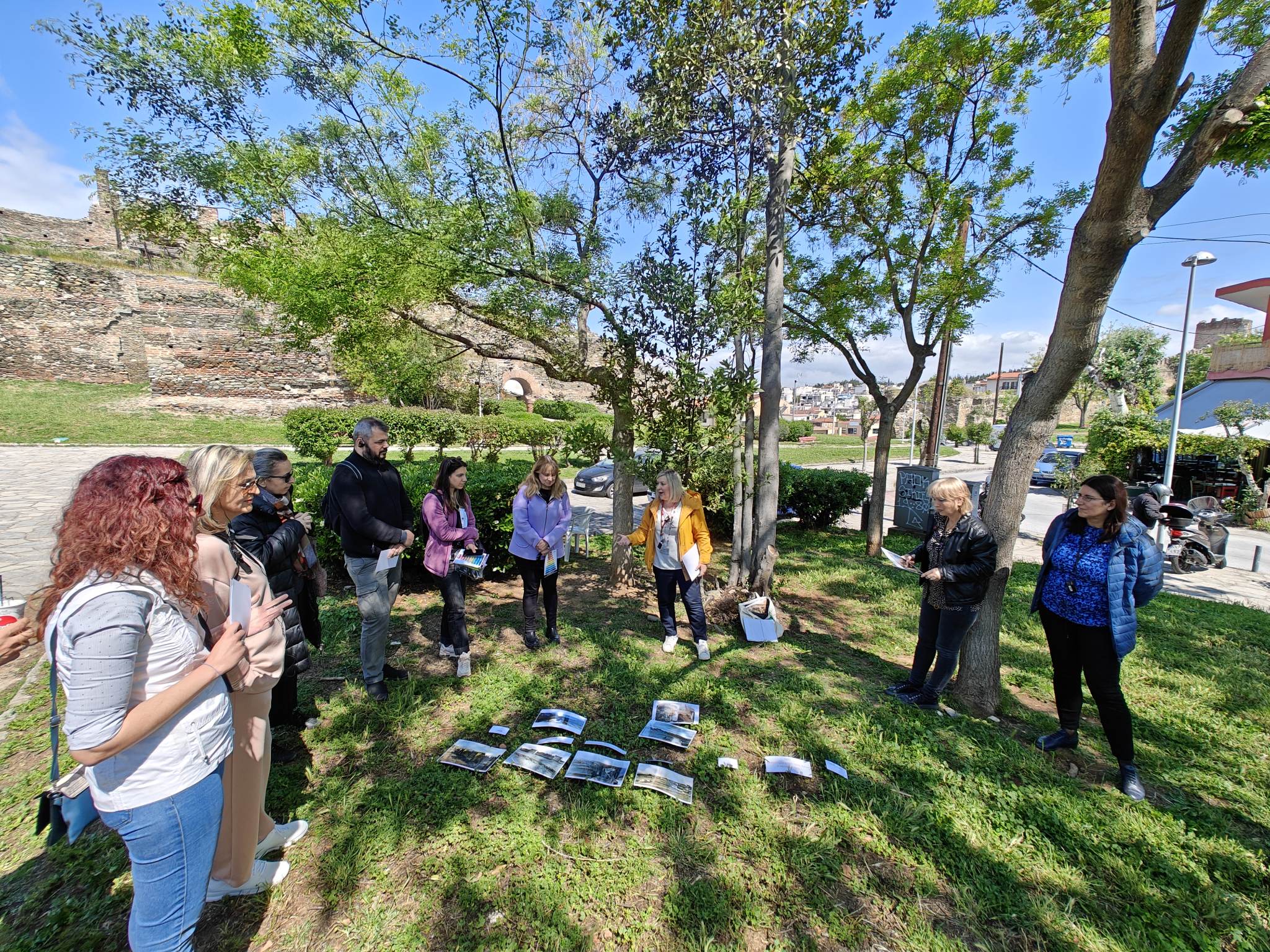
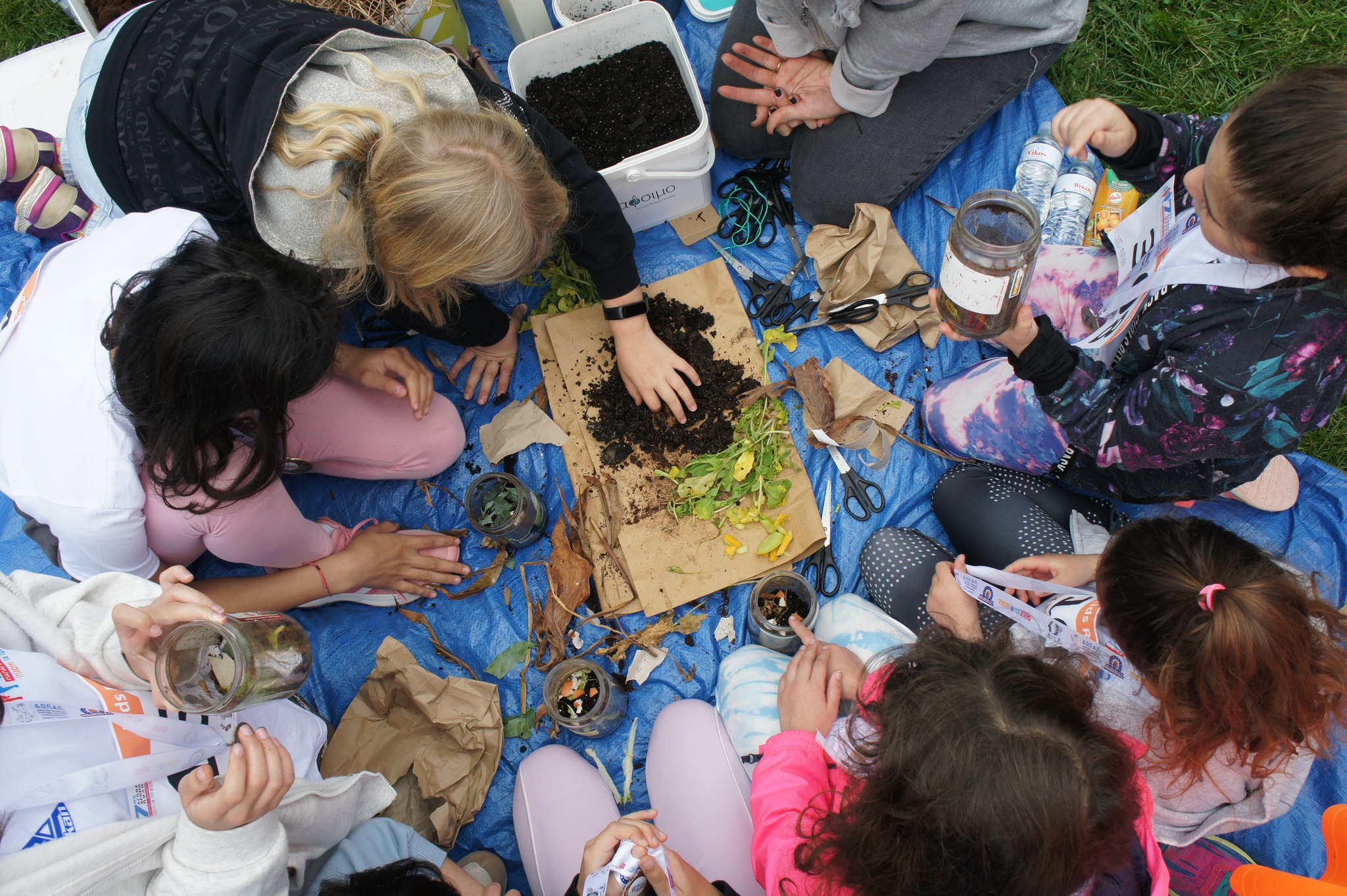
Citizens engage in a creative activity outdoors.
This participatory approach is supported by a digital toolset designed to enable citizen science and large-scale data collection. “We use digital tools to gather collective intelligence, while paying close attention to data privacy, control and transparency. All data handling is designed to be GDPR-compliant, so that people can clearly see what is collected, how it is shared, and with whom,” says Xhelili. The toolset combines consumer-facing interfaces with secure data infrastructure. People can respond to tailored questionnaires, manage the information they share and reuse commonly provided data when similar requests arise. Behind the scenes, the system supports secure data requests and sharing, records permissions, and allows information to be stored, filtered and analysed in a structured way. It is also designed to connect with external tools and organisations, helping different actors work from a shared evidence base rather than in separate silos. The expected outcome is richer and more usable data that can help different stakeholders act in a more coordinated way towards fairer, healthier and more sustainable food systems. “Researchers can build on existing evidence; retailers can identify barriers and gaps; and policymakers can better understand what shapes people’s food choices in practice, including why healthier or more sustainable options are not always easy to adopt,” Xhelili explains.
The potential of coordinated measures like this is also reflected in projections for the coming decades. A recent study by the International Institute for Environment and Development highlights how action on food systems can help strengthen climate resilience, protect ecosystems and improve food security, especially in low-income countries. A 2024 report by Deloitte points in a similar direction, estimating that a transition towards more sustainable food systems could lift some 300 million people out of undernourishment and reduce food prices by 16%.
Realising this potential requires strong collaboration, Kozic says, particularly when it comes to increasing the production and consumption of local food. “Our experience shows that living labs can play an important role in enabling more structured and effective cooperation, and can generate a positive impact within their ecosystems.”
For Xhelili, this is also why behavioural change should be understood as part of a broader enabling environment: “The opportunity lies in aligning what is available, how choices are communicated, how markets function and how policies are designed. It is not just about individual knowledge or motivation. Real change depends on the combination of consumer behaviour, market conditions, communication and policy support.”
Photo credits: INCOMMON